TL;DR
- Gently clean your mouth with warm water to keep the area clean.
- If there is any bleeding, press clean gauze against it until it stops.
- If you can find the broken piece, keep it safe in milk or saline solution.
- Avoid chewing on that side to prevent making things worse.
- Use a cold compress on your cheek to help reduce swelling.
- Cover any sharp edges to protect your tongue and cheeks.
- Take over-the-counter pain relief if needed.
- See an emergency dentist as soon as possible.
Do You Have a Chipped Tooth?
A chipped tooth is a common dental issue that can occur suddenly, whether from biting down on something hard, an injury, or everyday wear and tear. While some chips may seem minor, they can still affect your tooth’s strength, appearance, and sensitivity if left untreated.
In this article, we’ll explore the common causes, potential complications, and the most suitable treatments based on the severity of the damage. Remember, it’s always advisable to visit an emergency dentist if you suspect the damage is greater than it appears.
What Should You Do Immediately After a Chipped Tooth?
How you respond in the first few minutes after chipping a tooth can make a real difference in the outcome. Here is what to do:
- Start by gently rinsing your mouth with lukewarm water. It helps wash away any debris and keeps the area clean.
- If you notice a piece of the tooth has broken off, try to find and preserve it. Place it in milk or a saline solution, as this may help your dentist reattach it. Avoid touching the exposed part of the tooth, as it may be sensitive.
- If the injury was due to trauma, swelling can develop around the affected area. Applying a cold compress helps reduce inflammation. Covering a chipped tooth with dental wax or sugar-free gum can help prevent injuries to your tongue and cheeks from any sharp or jagged edges.
- Over-the-counter drugs like ibuprofen can help manage any pain.
- If your tooth becomes sensitive, you should avoid hot, cold, or sugary foods. Most importantly, even if the damage appears to be small, do not put off visiting an emergency dentist.
What Causes Chipped Teeth and Who Is Most at Risk?
Chipped teeth are frequently the result of multiple circumstances rather than a single cause. Even though teeth are made to withstand normal wear and tear, some habits can eventually cause them to deteriorate.
- The most common cause is biting down on hard foods such as ice, nuts, or hard candies.
- Sudden trauma, like a blow to the face or a fall, can also result in a chipped tooth. In such cases, the damage is immediate and often noticeable.
- Tooth decay can gradually weaken enamel, making the tooth more prone to breaking even during normal chewing.
- Large fillings may reduce a tooth’s structural strength, increasing its vulnerability.
- Teeth grinding, especially during sleep, is another factor. Over time, constant pressure from habits like grinding can create tiny cracks in the tooth, which may eventually turn into a chipped tooth.
- As we age, the enamel wears down, making teeth more prone to chipping.
- People involved in contact sports without protective gear are at higher risk.
- Poor oral hygiene and irregular dental visits can further increase the chances of unnoticed damage progressing into a chip.
How to Fix a Chipped Tooth
Treatment for a chipped tooth depends on how much of the tooth is affected. Here is a general breakdown of what to expect:
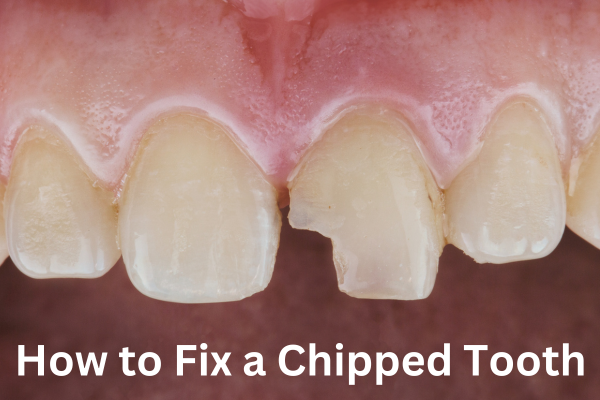
- Minor Chips: If the damage affects only the outer layer, the enamel, the fix is often quick and simple. Your dentist will smooth out rough edges. If a small piece is missing, they can rebuild it using a tooth-colored material. This blends in naturally with your smile.
- Moderate Chip: When the damage is more noticeable, usually in front teeth, veneers may be suggested. These thin coverings are placed over the tooth to improve both appearance and function. They are often used for aesthetic purposes.
- Severe Chip: For more severe cases where the chipped tooth extends into deeper layers, a dental crown may be required. A crown will be used to cover the entire tooth. This helps it regain strength and protects it from further damage. If the inside of the tooth (the pulp) has been affected, your dentist will treat it with a root canal before placing the crown.
In cases where the damage is too extensive to repair, extraction may be the only option, though every effort will be made to save the natural tooth first.
When Should a Chipped Tooth Be Treated as an Emergency?
Not every chipped tooth requires an emergency visit, but some situations should not wait. Here are the signs that you need to be seen right away:
- Severe or constant pain that does not ease up
- Sudden sensitivity to heat, cold, or pressure, which may indicate deeper layers are exposed
- Bleeding that does not stop after applying pressure
- A large piece of the tooth has broken off
- A red or pink area visible inside the tooth, which suggests pulp exposure
- Swelling in the face, gums, or jaw, especially if accompanied by pus or fever, as these can point to an infection that needs prompt treatment
What Should You Avoid Doing After Chipping a Tooth?
After a chipped tooth, certain actions can worsen the situation, even if they seem harmless at first. Being a little careful at this stage can help keep the chipped tooth from getting worse before you see a dentist.
- Do not ignore the injury even if there is no pain. Sometimes there’s no pain, but the inside of the tooth may still be exposed. This can cause problems later.
- Try not to use that side while eating. It can make the chip worse or break the tooth further.
- Avoid putting Aspirin on your teeth and gums. It can irritate the area and even cause burns.
- Stay away from hard, very hot, very cold, or sugary foods, as they can make the tooth sensitive.
How Can You Prevent Chipped Teeth in the Future?
While accidents happen, a few straightforward habits can meaningfully reduce your risk:
- Do not chew hard objects, such as ice, pens, or hard candies.
- Proper oral hygiene keeps enamel strong.
- Regular dental check-ups help catch small issues before they turn into bigger problems.
- Always use a mouthguard during sports or physical activities.
- Use a night guard if you grind your teeth while sleeping.
Conclusion
A chipped tooth is not something to brush off, even when it seems minor. Acting quickly, rinsing your mouth, protecting the area, and getting it checked out can make a significant difference in how smoothly things are resolved.
At Hopkins Family Dentistry, we are proud to serve the Hopkins community and the broader Twin Cities area with dental care that combines the latest technology with a genuinely warm, personal approach. Dr. Clayton and our team understand that dental visits are not always something people look forward to, which is why we work hard to make every appointment as comfortable and straightforward as possible. With 95% of first-time visitors becoming a part of our family, we stand by our compassionate approach to dentistry.
Whether you’re trying to understand how to fix a chipped tooth or looking for dental care in Hopkins that you can count on, we are here for you.
Phone: 952.935.2121
Address: 1919 Mainstreet, Hopkins, MN 55343
Email: office@familydentistryhopkins.com
FAQs
A chipped tooth can cause bad breath because the damaged area may trap bacteria over time, which can lead to unpleasant odors if it is not properly treated.
It is safe to use mouthwash on a chipped tooth, but choosing an alcohol free formula is recommended to avoid irritation or stinging in the sensitive area.
A chipped tooth can affect jaw alignment in some cases, as changes in your bite caused by the damage may lead to slight alignment issues if left untreated.
Children are more prone to chipped teeth because they are often active, playing sports or running around, which increases the likelihood of dental injuries.
Dehydration can indirectly increase the risk of chipped teeth because reduced saliva levels may increase the risk of tooth decay, which can weaken teeth and make them more susceptible to chipping.