TL;DR
- The dental implant process, step by step, spans three main phases: consultation and planning, implant surgery, and crown placement.
- The dental implant process timeline typically runs 3–6 months, with most of that time spent on osseointegration, the bone fusing to the implant post.
- Not everyone is immediately eligible. Bone density, gum health, and clinical history are evaluated at the dental implant consultation.
- Dental implant recovery is generally well-tolerated. Soreness and swelling in the first few days are normal and expected.
What Does the Dental Implant Process Involve?
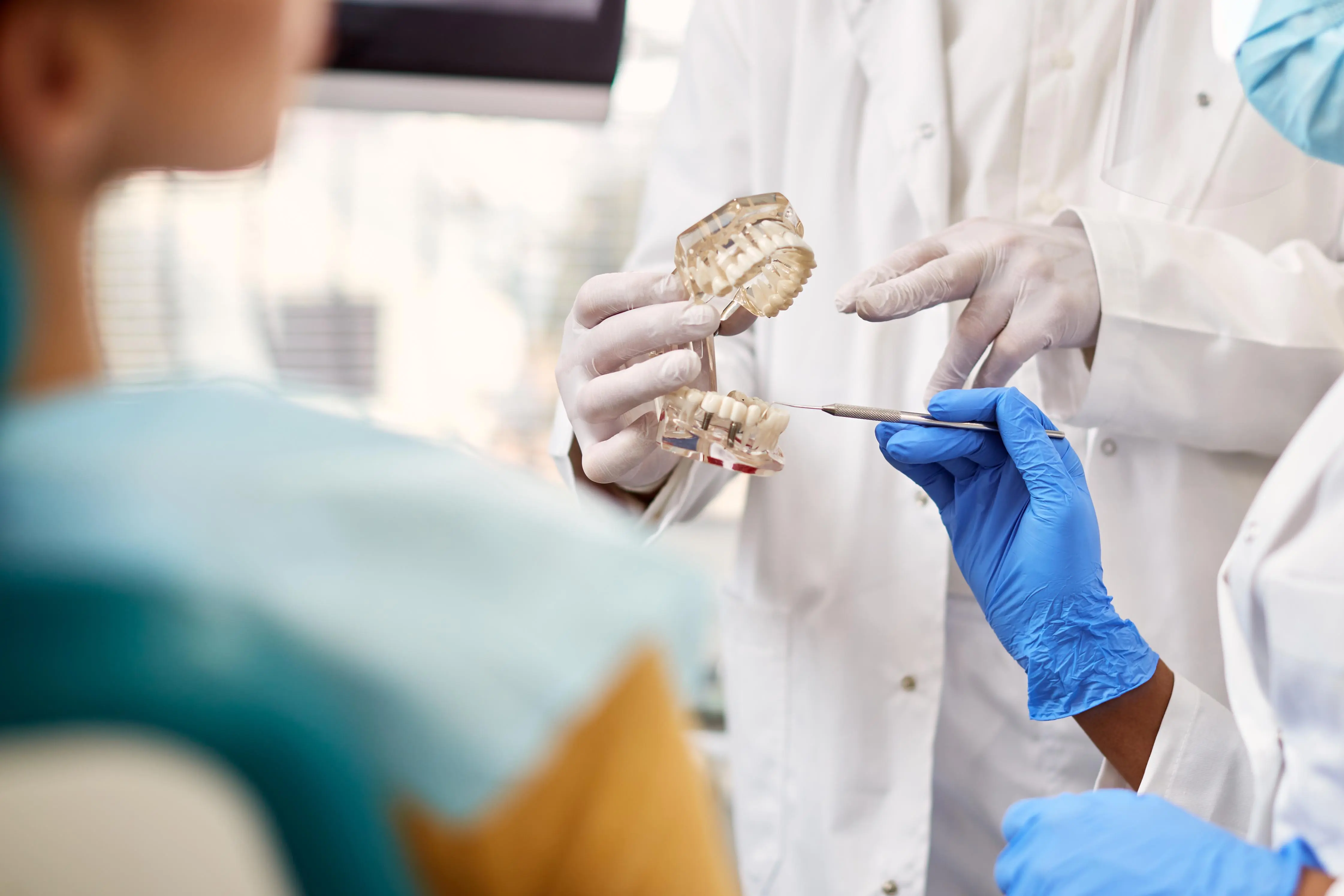
The dental implant process involves placing a titanium post into the jawbone to act as an artificial root, which later supports a custom crown to replace a missing tooth. It is a multi-stage procedure that typically spans several months, but most of that time is passive healing, not active treatment.
Patients exploring dental implant services at Hopkins Family Dentistry begin with a thorough evaluation before any surgery is scheduled, ensuring the approach is matched to their specific bone structure and oral health. The sections below explain each stage in detail so you know exactly what to expect from start to finish.
Step 1: Dental Implant Consultation and Treatment Planning
The dental implant consultation is where candidacy is determined, and the treatment plan is built. At Hopkins Family Dentistry, Dr. Terri Trogen, who has advanced training in prosthodontics, leads implant evaluations. This appointment covers:
- Bone density assessment: X-rays or a cone beam CT scan confirm whether enough bone exists to support the implant fixture. Insufficient bone may require grafting before placement can proceed.
- Gum health review: Active periodontal disease must be treated and stabilized before implant surgery, as infection around the site significantly increases failure risk.
- Medical history: Certain conditions (uncontrolled diabetes, blood thinners, bisphosphonate use) affect healing and eligibility. These are discussed openly, so the plan accounts for them.
- Treatment timeline: A realistic schedule is mapped out, including whether tooth extraction, bone grafting, or other preparatory steps are needed before the implant itself.
Patients who need bone grafting should expect the timeline to extend by 3 to 4 months to allow the graft to integrate before implant placement.
Step 2: Implant Surgery: What Happens During Placement
Implant placement is a surgical procedure performed under local anesthesia. A single-implant surgery typically takes under an hour. The sequence is:
1. Incision: A small incision is made in the gum tissue at the implant site to expose the underlying bone.
2. Drilling: A series of precision drills creates a channel in the bone sized to accept the titanium fixture.
3. Fixture placement: The titanium post is threaded into the prepared channel and seated below the gum line.
4. Closure: The gum tissue is sutured closed over the implant. In some cases, a healing cap is left exposed above the gumline instead.
Step 3: Osseointegration: The Dental Implant’s Healing Process
Osseointegration is the dental implant’s healing process, or the period during which the jawbone gradually grows around and bonds to the titanium post, making it a stable, permanent anchor. This stage typically takes around 3 to 6 months and requires no active treatment. Patients continue normal daily activity throughout.
Factors that affect how quickly osseointegration completes include:
- Bone density and volume at the implant site
- Overall health (smokers and patients with uncontrolled diabetes heal more slowly)
- Adherence to post-surgical care instructions, including avoiding hard foods at the site
Follow-up appointments during this phase allow the dentist to monitor healing and confirm integration before the next step is scheduled.
Step 4: Abutment and Crown Placement
Once osseointegration is confirmed, the implant is ready for the restorative phase. If the abutment (the connector between the post and the crown) was not placed during surgery, a minor second procedure is performed to attach it. The gum is given 1 to 2 weeks to heal around the abutment before impressions are taken.
A scan or impression of the abutment is sent to the dental laboratory to manufacture the custom crown. At Hopkins Family Dentistry, the crown is matched to the color, shape, and size of surrounding teeth. Once the crown arrives, it is seated over the abutment, completing the dental implant process. The result functions and looks like a natural tooth.
Dental Implant Process Timeline: How Long Does It Take?
The dental implant process timeline varies by patient, but a general guide for a straightforward single-implant case:
- Consultation and planning: 1 to 2 weeks (includes imaging and any pre-treatment)
- Bone grafting (if needed): Add 3 to 4 months for graft integration
- Implant surgery: Single appointment, under 1 hour
- Osseointegration: 3 to 6 months
- Abutment and crown: 2 to 4 weeks after osseointegration is confirmed
Total: 4 to 8 months for most patients, or up to 12 months when grafting is required. The majority of this time is passive, with patients not being in the chair for most of it.
What Does Dental Implant Recovery Look Like?
Most patients find dental implant recovery manageable. The days immediately after surgery are the most uncomfortable. Here are some aftercare guidelines often recommended by Dr. Anna Clayton to support smooth healing:
- Eat soft foods (yogurt, eggs, mashed vegetables) for the first week
- Avoid smoking since it significantly impairs healing and raises the risk of implant failure
- Do not use a straw for 24 to 48 hours after surgery to avoid dislodging your blood clot
- Keep the site clean with gentle salt-water rinses as directed
- Attend all scheduled follow-up visits so healing can be monitored
Fever, persistent or worsening pain beyond day 4, or significant swelling after the first 3 days should be reported promptly, as these may indicate infection requiring early intervention.
Considering Dental Implants? Here’s Your Next Step
Understanding each stage of the dental implant process before starting makes the experience significantly less daunting. Dental implants are a well-established treatment option, with a reported long-term success rate of around 90 to 95% over 10 years. The consultation is the right starting point. It gives you a personalized timeline, a clear cost picture, and honest answers about whether you are a candidate without any obligation to proceed.
To book a consultation for dental implant services in Hopkins, MN, contact Hopkins Family Dentistry:
Address: 1919 Main Street, Hopkins, MN 55343
Phone: 952.935.2121
Email: office@familydentistryhopkins.com
Hours: Mon, Tue, Thu 7:00 am–5:00 pm | Fri 7:00 am–12:00 pm | Wed closed
Frequently Asked Questions
The surgery itself is performed under local anesthesia and is generally not painful. Post-operative soreness for 2 to 3 days is expected and manageable with over-the-counter pain relief in most cases.
In some cases, yes. Single-step surgery allows the abutment to be placed the same day as the fixture. Suitability depends on bone density and the specific clinical situation.
The most common factors are poor bone integration, smoking, uncontrolled diabetes, and infection at the implant site. Early-stage failure is often detectable at follow-up visits.
With daily oral hygiene and regular checkups, implants can last around 15 to 25 years or longer. However, you may need to replace the crown after 10-15 years, depending on wear.
Bone grafting is only needed if there is insufficient jawbone to support the implant. Your dentist will determine this after X-rays or a 3D scan.