Key Takeaways
- Invisalign uses removable clear aligners, while braces use fixed brackets and wires. The ideal choice depends on your orthodontic needs, not appearance alone.
- Braces are better for complex cases and don’t rely on patient compliance. Invisalign offers comfort and discretion but requires 20 to 22 hours of daily wear.
- The cost of both treatments generally ranges from $3,000 to $8,000. It depends on case complexity and the length of treatment.
- Invisalign is often suggested for mild to moderate issues, while braces are better suited for complex tooth and bite corrections.
- Switching from braces to Invisalign is possible in some cases, usually for treatment refinement or retention, but it may increase treatment time and cost.
What Is the Difference Between Invisalign and Braces?
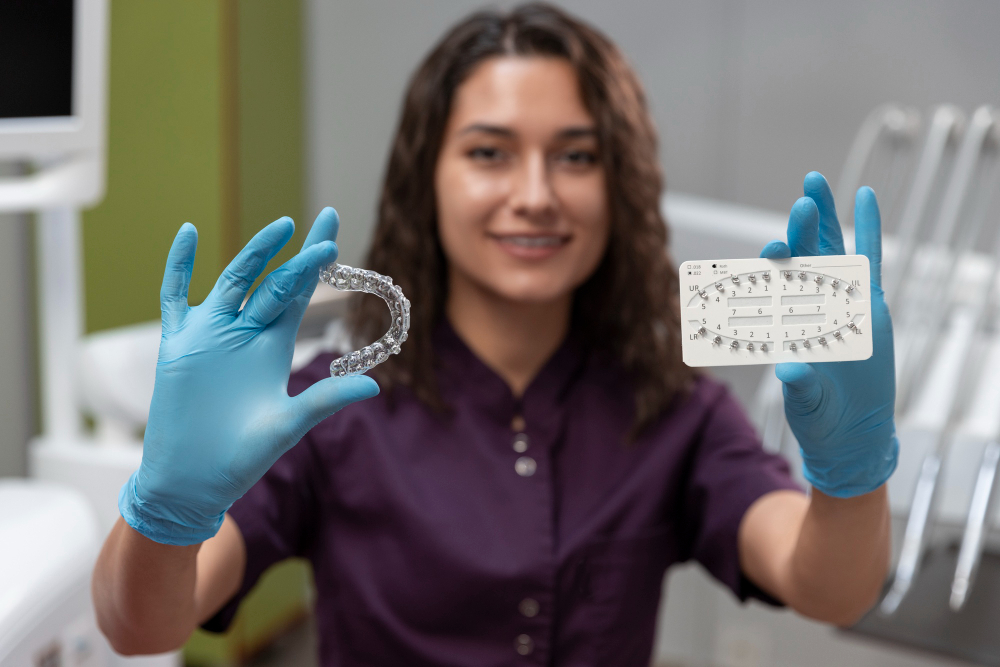
The biggest difference between Invisalign and braces is how they work. Invisalign uses a series of clear, removable aligners that are custom-made to gradually move your teeth into place. Braces use brackets and wires that are fixed to your teeth and apply continuous pressure to guide them into the correct position. While both treatments can improve your smile and correct bite problems, they are not always suitable for the same orthodontic needs.
At Hopkins Family Dentistry, we help patients choose between Invisalign and braces based on more than appearance alone. In the sections below, we’ll compare the pros and cons of Invisalign and braces and help you decide which option may be the better fit for your smile.
What Are the Pros and Cons of Invisalign and Braces?
Let’s take a closer look at what each treatment offers and where it falls short:
Pros of Braces
- Versatility: Braces are effective for treating a wide range of orthodontic issues, including severe bite problems and complex tooth rotations that may not respond to clear aligners.
- No Patient Compliance Needed: As a fixed appliance, braces work continuously without relying on patient wear time, making them ideal for younger patients or those who may forget to wear removable trays.
- Durability: Made from strong metal or ceramic materials, braces are built to handle the forces required for significant tooth movement and remain effective throughout the treatment.
- Cost-Effective: Braces are generally more affordable than Invisalign, especially for complex cases requiring long-term care.
- Suitable for All Age Groups: Braces are commonly used for children, teens, and adults alike, making them a trusted option across all age ranges.
Cons of Braces
- Diet Restrictions: Patients must avoid certain foods, especially hard, sticky, or chewy items, to prevent damage to brackets and wires.
- Difficult Oral Hygiene: Braces can make brushing and flossing more challenging, as food and plaque often accumulate around the brackets. Additional cleaning tools are often needed.
- Less Aesthetic: The visibility of metal or ceramic brackets may be a concern for those who prefer a more discreet treatment option.
- Discomfort: Brackets and wires can irritate the inner cheeks and lips, especially after adjustments, leading to occasional soreness or ulcers.
- Emergency Visits to the Dentist: Braces can sometimes break or become loose, requiring an unscheduled trip to the dental office for repair.
Pros of Invisalign
- Comfortable Fit: Invisalign aligners are made from medical-grade plastic that sits comfortably in the mouth, causing minimal irritation to the gums or cheeks.
- Removable for Daily Activities: The aligners can be easily taken off during meals or while brushing and flossing, making everyday routines more convenient.
- Supports Better Oral Hygiene: Since the aligners are removable, it’s easier to maintain good brushing and flossing habits without any obstructions.
- No Dietary Restrictions: There’s no need to avoid hard, sticky, or chewy foods; simply remove the aligners while eating and enjoy your meals without worry.
- Subtle Appearance: Invisalign is designed to be nearly invisible, making it a good option for those who prefer a more discreet treatment.
- Fewer Unexpected Visits: Without metal brackets or wires, there’s a lower chance of dental emergencies or urgent adjustments.
Cons of Invisalign
- Higher Cost: Invisalign treatment often comes at a higher price point compared to traditional braces, which may be a factor for some patients.
- Requires Consistent Wear: To be effective, the aligners must be worn for 20 to 22 hours a day. Skipping wear time can delay results.
- Not Suitable for Some Cases: Invisalign may not be recommended for severe bite issues or significant tooth movements, where traditional braces are more effective.
- Potential for Longer Treatment: In some mild cases, Invisalign can take longer than expected when compared to conventional braces.
- Care While Wearing Aligners: You need to avoid sugary beverages when aligners are in place. Liquids and sugars can become trapped beneath the trays, which may lead to enamel erosion over time.
Invisalign vs. Braces: Cost Comparison
Of course, cost is also an important factor when choosing orthodontic treatment. Here’s how Invisalign and braces compare:
|
Treatment |
Average Cost Range |
What Can Affect the Cost? |
|
Invisalign |
Around $3,000 to $8,000 |
Number of aligners, treatment complexity, treatment duration, and follow-up visits |
|
Traditional Braces |
Around $3,000 to $7,500 |
Type of braces, severity of alignment issues, treatment length, and adjustments needed |
During your consultation, the dentist can evaluate your teeth, discuss your options, and provide a personalized estimate. At Hopkins Family Dentistry, we also offer flexible payment plans to help make orthodontic treatment more accessible and easier to manage.
Which Is Better: Invisalign or Braces?
There isn’t a single treatment that’s right for everyone. Our dentists recommend Invisalign or braces based on what’s most appropriate for your smile.
Invisalign may be recommended if you:
- Have mild to moderate orthodontic issues.
- Want a discreet treatment that’s less noticeable.
- Can wear your aligners for 20 to 22 hours each day.
- Prefer the flexibility of removing your aligners for meals and oral hygiene.
Braces may be recommended if you:
- Have moderate to complex orthodontic concerns.
- Need significant tooth movement or bite correction.
- Prefer a fixed treatment that doesn’t rely on remembering to wear aligners.
- Are looking for a solution that works continuously throughout treatment.
Is It Possible to Switch from Braces to Invisalign?
Switching from braces to Invisalign is possible and often done for improved comfort or aesthetics. However, timing and feasibility depend on the individual case.
Invisalign is typically used after braces for two primary purposes:
-
Finishing (Refinement)
Invisalign can be used post-braces for minor detailing and finishing touches to perfect alignment.
-
Retention
Like all orthodontic treatments, retainers are essential to prevent teeth from shifting back. Invisalign-style retainers are often preferred for their comfort and discreet appearance.
Orthodontists may recommend completing significant tooth movements with braces before transitioning to aligners.
Steps to Switch:
- Brackets are removed
- A physical impression or digital scan is taken
- Custom Invisalign trays are fabricated and delivered to continue treatment
This transition may increase the total treatment cost and time, depending on how far along the patient is in their current treatment.
The Bottom Line
There is no single right answer when it comes to Invisalign vs. braces, only the answer that fits a particular bite, budget, and daily routine. That’s why sitting down for an actual evaluation matters so much more than any general comparison ever could.
Hopkins Family Dentistry has built its practice around exactly that kind of honest, personalized guidance. Come visit us at our dental clinic in Hopkins, MN, at 1919 Mainstreet, Hopkins, MN 55343, and see why more than 90% of our first-time patients become lifelong patients. To schedule a visit, call (952) 935-2121 or email office@familydentistryhopkins.com.
FAQs
Braces typically require monthly adjustments, while Invisalign check-ins are often spaced six to eight weeks apart since aligner sets are usually provided in batches.
Both can cause mild soreness when a new aligner or wire adjustment is applied. Invisalign trays tend to be gentler on the cheeks and gums since there’s no metal rubbing against soft tissue.
For mild to moderate crowding, Invisalign is generally just as effective as braces. For severe rotations or significant bite issues, braces usually produce more predictable results.
Yes, there’s no upper age limit for Invisalign as long as teeth and gums are healthy enough to support movement. Many adult patients choose it specifically because it’s less noticeable at work.
Invisalign First is designed for younger children with developing jaws, though traditional braces are still more common for kids with mixed dentition or significant crowding.